Family IPTV Viewing Routine: Shared vs. Individual Organization Guide
October 26, 2026 · 16 min read
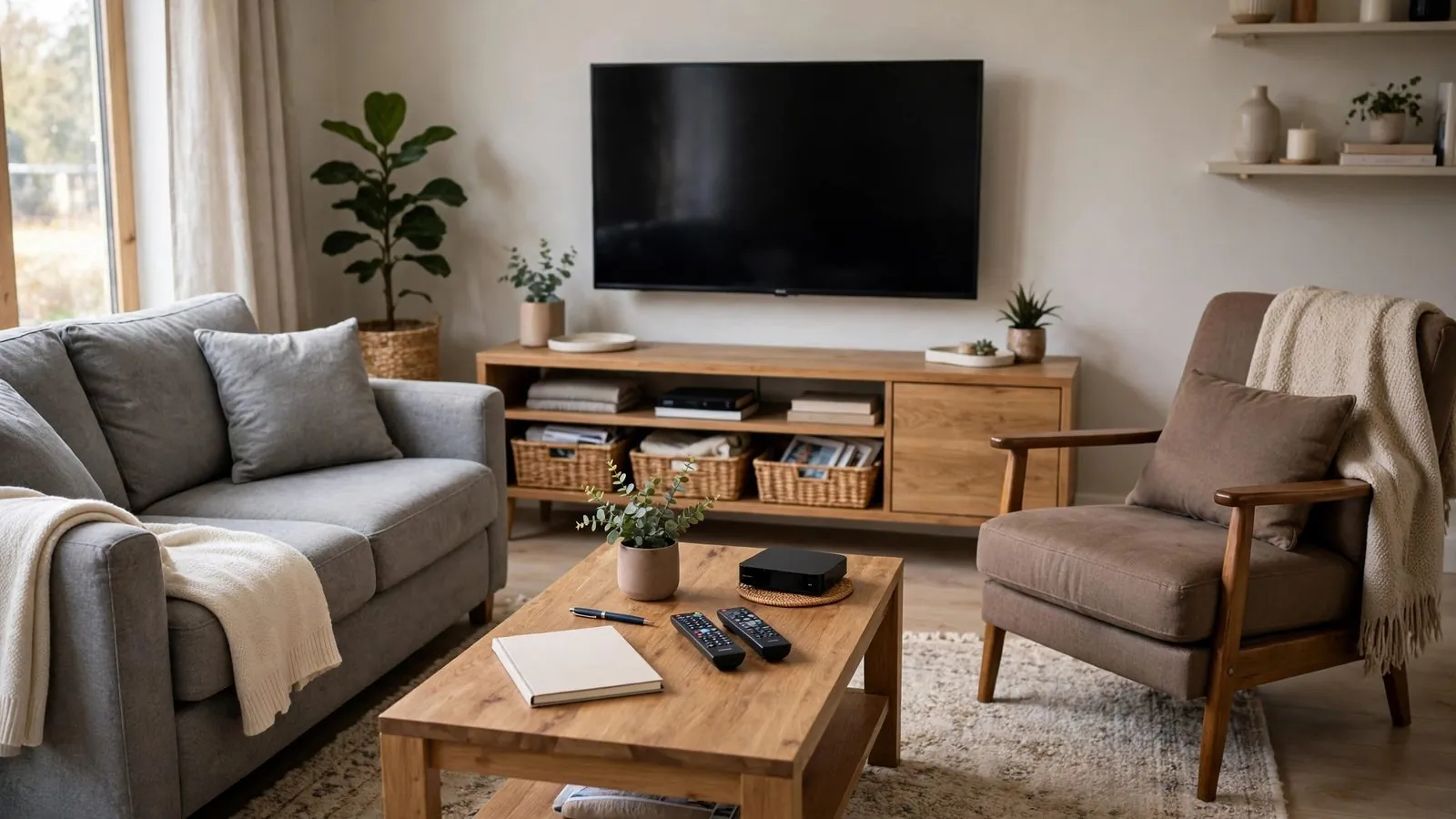
Managing household entertainment across multiple family members is often less about equipment and more about human habits. When a household gathers around the television or disperses across personal screens, the resulting experience depends heavily on the viewing approach established in the home. On one hand, a structured family viewing schedule anchors evening routines, encouraging shared cultural moments, predictability, and transparent screen-time oversight. On the other hand, an ad-hoc model grants family members personal autonomy, allowing each person to pursue their own entertainment interests independently across living room screens, tablets, or secondary displays.
Neither approach is universally ideal, yet each creates a distinct domestic dynamic. Without intentional organization, spontaneous viewing can lead to social fragmentation, conflicting schedules during major live broadcasts, and friction over who controls the main screen. Conversely, an overly rigid timetable can stifle personal relaxation and fail to accommodate differing bedtimes, homework schedules, and individual tastes.
By comparing the day-to-day realities of these two approaches—structured collective viewing versus uncoordinated personal viewing—households can identify the habits that best support domestic harmony. This guide examines the logistical, organizational, and social aspects of managing a family IPTV viewing routine, detailing category curation, viewing etiquette, conflict resolution during overlapping broadcasts, and routine design.
The Communal Living Room: The Dynamics of Structured Family Viewing
A structured viewing routine relies on a deliberate schedule centered on a shared domestic area, typically the main living room. In this setup, television is treated as an intentional communal event rather than background ambiance or continuous individual stimulation. Family members establish specific appointment times for watching together, whether for evening news digests, weekend sports events, documentary series, or family film nights.
A primary advantage of a structured approach can be greater shared domestic interaction. When parents and children share the same screen, entertainment becomes a shared frame of reference that encourages spontaneous discussion, shared humor, and common interests. This model also simplifies parental supervision. Because viewing occurs in open living spaces during agreed-upon windows, parents maintain natural visibility over the themes, tone, and pacing of the programming without intrusive monitoring.
However, structured viewing requires ongoing compromise. In a home with divergent age brackets—such as a household with both a primary school child and a teenager—finding programming that satisfies everyone without boring the older child or exposing the younger one to inappropriate themes demands active curation. Furthermore, structured routines require discipline; if a broadcast begins at a set time, family members must complete homework, chores, and personal obligations beforehand, which can introduce scheduling pressure into an otherwise relaxing evening.
The Personal Device Pattern: Autonomy, Isolation, and Spontaneous Choice
In contrast to the living room focal point, an ad-hoc routine allows household members to consume content independently whenever their personal schedule permits. In this model, family members watch programming on various household screens, such as tablets, bedroom displays, desktop monitors, or secondary television sets, guided entirely by individual preference rather than a collective consensus.
The greatest asset of an ad-hoc viewing routine is personal autonomy. Each family member unwinds according to their own biological rhythm and emotional needs. A parent who has spent a demanding day at work may prefer a focused informational broadcast or an international documentary, while an adolescent might gravitate toward animation, gaming tournaments, or niche hobbies that interest no one else in the home. Ad-hoc viewing can reduce living-room competition over channel selection, remote control possession, and genre preferences, although it does not eliminate domestic disagreements entirely.
Nevertheless, an entirely uncoordinated model presents noticeable drawbacks. When viewing is decentralized, the family living room often becomes quiet while individual bedrooms become isolated media hubs. Over time, household members may lose touch with one another's interests, and parents may find it significantly harder to track overall screen-time totals or verify that viewing material remains age-appropriate. Furthermore, uncoordinated viewing often results in unintentional overlap, where two or more members attempt to access different live segments simultaneously without communicating their plans, leading to avoidable domestic misunderstandings.
Organizing Channel Groups and Favorites for Household Simplicity
Regardless of whether a home favors structured gatherings or independent viewing, navigating extensive broadcast directories can overwhelm users if content categories remain uncurated. Long, disorganized channel lists require tedious scrolling, which frustrates young children, elderly relatives, and time-conscious parents alike. Thoughtful personal organization transforms a sprawling interface into an accessible, calm domestic resource.
Where supported by your IPTV application or hardware, establishing clear, purpose-driven favorite groups tailored to household patterns can simplify navigation compared to scrolling through general broadcast directories. Consider configuring categories according to domestic context where these features are available:
• Morning Information & Weather: A concise selection of local morning news, traffic summaries, and educational broadcasts limited to five or six essential channels for quick viewing before school and work commutes.
• Early Evening Family Hub: A curated selection of documentaries, light entertainment, and animated series that household members have previewed and agreed upon, positioned near the top of the interface for quick access during dinner preparation.
• Weekend Sports & Live Events: A dedicated list containing recurring sports coverage and weekly event streams, separated from standard entertainment channels to prevent clutter during the workweek.
• Quiet Evening & Cultural Programs: A tranquil selection of arts, history, literature, and late-night informational streams intended for adult relaxation after younger family members have completed their bedtime routines.
Organizing channels into clear thematic brackets minimizes the time spent searching through menu hierarchies. When household members know which folders hold their preferred programs, navigating daily viewing becomes more straightforward, though custom categories provide organizational convenience rather than parental access control.
Managing Competing Broadcasts: Coordination Over Contention
One of the most persistent sources of household tension is the collision of live events. Unlike on-demand catalogues that can be paused or resumed at will, live programming—such as championship sporting matches, live election updates, seasonal cultural festivals, or scheduled series finales—takes place on an inflexible timetable. When two family members prioritize live events occurring at the exact same hour, friction inevitably arises unless an agreed coordination policy exists.
Managing overlapping interests requires transparent scheduling rather than impromptu arguments in front of the television. Families benefit from establishing a shared household calendar—either on a central kitchen whiteboard or a shared digital family planner—where major live broadcast commitments are logged several days in advance.
When a schedule collision occurs, the household can apply clear, pre-established principles:
• The Rotation Principle: If one family member held the living room screen for a priority event the previous weekend, the alternate member receives priority for the upcoming occurrence.
• The Community Priority Guideline: Events that appeal to multiple family members take precedence on the primary communal screen, while solitary interests are allocated to secondary displays or personal devices.
• The Time-Shift Agreement: If catch-up, on-demand replay, or recording functionality is supported by the specific service and application, one viewer may agree to watch the program later, allowing time-sensitive live broadcasts to occupy the primary screen.
Adopting structured expectations can help reduce the feeling that one family member's leisure time is arbitrarily prioritized over another's, helping turn potential conflicts into routine domestic compromises.
Household Viewing Etiquette: Clear Boundaries for Shared Spaces
A family entertainment space requires clear social norms to ensure that viewing remains pleasant for everyone in the vicinity. Because living rooms often serve as multi-functional areas for conversation, homework, reading, and relaxation, unmanaged screen use can quickly disrupt non-viewing household members.
Healthy household viewing etiquette encompasses several practical considerations:
• Auditory Consideration: Volume levels should be regulated so that sound does not spill unnecessarily into adjacent study areas or bedrooms, while keeping necessary closed captions or subtitles enabled for viewers who rely on them. If an individual member is watching personal content in a shared room, using headphones can help keep the communal space quiet.
• Respect for the Communal Space: When someone is watching a scheduled program in the living room, other family members should refrain from initiating loud secondary media consumption, such as playing short-form mobile videos or video game audio, in the immediate vicinity.
• The Pause Courtesies: When watching on-demand content or live streams where pausing is supported, anyone who steps away for a beverage, telephone call, or chore should communicate whether the group should pause the program or continue viewing. Agreeing on practical pause expectations prevents shared evenings from stalling indefinitely.
• Screen-Off Transitions: Leaving a television running as background noise when nobody is actively watching adds unnecessary ambient distraction to the home. Turning off screens when a program concludes helps maintain a calm living area and preserves the distinction between active entertainment and quiet domestic life.
Temporal Structuring: Weekday Discipline Versus Weekend Flexibility
A common mistake in household entertainment planning is attempting to apply an identical routine across every day of the week. Weekdays and weekends have fundamentally different rhythms, responsibilities, and emotional demands; viewing patterns should naturally reflect this distinction.
During Monday through Thursday, entertainment is usually subordinate to work, academic requirements, and sufficient sleep. A structured routine during the workweek helps protect household efficiency. For instance, agreeing on a modest shared viewing window after dinner allows family members to spend time together without encroaching on study time or sleep schedules. Independent viewing on personal devices during school nights can likewise be guided by mutually agreed family guidelines.
Conversely, Friday evenings and weekends present opportunities for looser, hybrid arrangements. A family might designate Friday night for a communal film chosen by rotation, while reserving Saturday afternoons for open, ad-hoc personal viewing where individual hobbies and sports take center stage. On Sunday evenings, returning to a predictable, shared broadcast can offer a calm transition into the upcoming school and work week.
By distinguishing between weekday discipline and weekend relaxation, households avoid the rigidity of perpetual control and the chaos of complete disorganization.
Qualitative Comparison: Structured Routines Versus Ad-Hoc Viewing
To understand how these two operational philosophies affect daily domestic life, consider the following qualitative comparison across key household dimensions.
Assessment Criterion: Household Harmony · Structured Shared Family Routine: Can foster shared cultural touchpoints, though requires ongoing compromise on program choices. · Ad-Hoc Individual Viewing Routine: Reduces competition for the main living room display, though family members may spend less time watching together.
Assessment Criterion: Screen-Time Predictability · Structured Shared Family Routine: Generally predictable when tied to established dinner, homework, or bedtime routines. · Ad-Hoc Individual Viewing Routine: Variable; depends on personal self-regulation or individual device-level settings.
Assessment Criterion: Content Discovery & Selection · Structured Shared Family Routine: Deliberate and discussed; requires compromise and exposes participants to diverse genres outside their habit. · Ad-Hoc Individual Viewing Routine: Highly specialized; each member explores narrow personal interests without broadening shared domestic tastes.
Assessment Criterion: Ease of Finding Programs · Structured Shared Family Routine: Straightforward when favorite lists or shared folders are supported and maintained. · Ad-Hoc Individual Viewing Routine: Dependent on individual app configuration and device-specific bookmarks.
Assessment Criterion: Personal Downtime Flexibility · Structured Shared Family Routine: Limited; individuals must adapt their schedule and preferences to collective family decisions. · Ad-Hoc Individual Viewing Routine: High; individuals watch precisely what they want, whenever their personal schedule allows.
Assessment Criterion: Parental Oversight Burden · Structured Shared Family Routine: Direct visibility during communal viewing, though active parental guidance is still required. · Ad-Hoc Individual Viewing Routine: Requires configuring parental settings on individual devices where supported, along with ongoing oversight.
Rather than viewing these models as mutually exclusive, many successful households adopt a hybrid framework: structured communal viewing for primary evening hours, combined with bounded windows of ad-hoc individual access during weekend leisure periods.
Family Entertainment Evening Checklist
Use this practical checklist to help coordinate a relaxed, well-organized family viewing evening:
• Confirm the Evening Schedule Early: Check with all household members by late afternoon to determine whether homework, household duties, and meal preparations will be complete before the scheduled broadcast.
• Verify Program Selection in Advance: Agree on the evening's viewing material before turning on the display, avoiding endless browsing through menus while everyone waits.
• Review Channel and Category Organization: Where favorite lists are supported by your app, save the chosen channel or program in advance to minimize menu navigation.
• Establish Secondary Device Zones: Clarify whether personal tablets or mobile devices may be used in the living area during the program, or if the evening is reserved exclusively for the main screen.
• Designate Audio Accommodations: If someone in the home needs to sleep early or study nearby, verify volume levels or prepare headphones, ensuring necessary subtitles or captions remain enabled for viewers who need them.
• Set a Definite Conclusion Point: Decide whether the television will be turned off immediately after the scheduled program concludes to prevent drifting into passive channel surfing.
Hypothetical Case Studies: Routine Adjustments in Practice
The following two fictional case studies illustrate how different households evaluate, adjust, and balance their viewing habits to improve domestic harmony.
Hypothetical Scenario A: The Thornton Household (Transitioning from Screen Fragmentation to Shared Routines)
The Thornton family includes two working parents, a fourteen-year-old daughter, and an eleven-year-old son. Over several months, the household had drifted into an entirely ad-hoc viewing routine. The father followed evening sports in the study, the mother watched documentary series in the kitchen on a mobile device, and both children remained in their bedrooms watching short video clips and animation on portable screens. While overt arguments were rare, family members rarely interacted during weekday evenings, and the children frequently stayed awake well past their target bedtimes due to unmonitored screen exposure.
To address this drift, the parents introduced an adaptable weekday framework agreed upon with both children. They designated an optional shared living room hour from 7:30 PM to 8:30 PM following dinner clean-up. Each weekend, the family discussed and selected programming they were all interested in exploring together. By household agreement, portable devices were set aside during this shared hour.
*Important Operational Reminder:* When organizing household streaming devices and shared living room hardware, always mask and never display account identifiers, playlist URLs, access tokens, or sensitive credentials on shared household boards, screens, or printed planners.
In this illustrative scenario, the family found that pre-planning shared viewing encouraged regular conversation and helped establish clearer evening boundaries, though maintaining the habit required ongoing flexibility when school assignments or workloads varied.
Hypothetical Scenario B: The Vasquez Family (Managing Conflicting Schedules with a Bounded Hybrid System)
The Vasquez household consists of a mother, an uncle who works rotating night shifts, and an older adolescent preparing for university entrance examinations. The family attempted to enforce a strict shared viewing schedule, but the conflicting daily timelines of shift work and heavy academic revision made collective viewing stressful and impractical. Enforcing a single living room schedule led to frustration, as family members felt pressured to abandon their personal responsibilities to participate in television appointments.
Recognizing the friction, the family transitioned to a bounded hybrid model. They designated Tuesday and Thursday evenings as autonomous: the uncle watched preferred recorded or catch-up broadcasts (where supported by their service) before leaving for work, the student studied in a quiet room, and the mother watched lifestyle programs on a secondary display with headphones. However, they preserved Sunday evening as a regular shared dinner and film gathering.
*Important Operational Reminder:* In any multi-user home where devices are accessed across shared desks or common spaces, ensure that private user tokens, subscription credentials, and direct service links remain fully concealed and unexposed during device handovers or setup.
This fictional example demonstrates how an adaptable schedule can accommodate demanding work and study commitments, easing household tension around screen access while maintaining a recurring family tradition.
Finding the Balanced Rhythm for Your Household
Creating an effective family IPTV viewing routine is an ongoing process of observation, adjustment, and open communication. A structured communal schedule strengthens domestic unity, promotes shared conversation, and provides gentle, built-in oversight over what enters the living room. Simultaneously, acknowledging individual autonomy through bounded personal viewing helps give family members the private space and flexibility needed to unwind after busy days.
Successful household routines often avoid dogmatic extremes. By organizing favorite channel groups cleanly, respecting shared living areas through considerate audio etiquette, and resolving broadcast conflicts with fair rotation rules, families can enjoy diverse television programming while maintaining mutual respect and domestic balance.
Want the full VeoTT experience?
Frequently asked questions
How can a family handle vastly different age gaps when choosing shared programming?
When children span wide developmental stages (for example, early elementary and high school), finding agreeable content requires active parental curation. While genres like nature documentaries, historical exploration, travel chronicles, and cooking competitions often appeal across age groups, specific episodes may still depict predator-prey violence, mature historical themes, or coarse language. Reviewing episode descriptions or previewing material in advance is recommended rather than assuming any genre is inherently safe for all ages. Another practical approach is alternating selection authority: allow older children to select one evening's program with parental oversight, and give younger children their turn on another evening.
What is the most effective way to prevent children from wandering into uncurated channel lists?
Creating a dedicated "Kids & Family" favorite folder or setting a default category can simplify navigation, but it is not a security measure and does not prevent children from switching to uncurated channel lists. Restricting mature content requires configuring actual parental controls—such as PIN protection, channel locking, or profile restrictions—if supported by your specific IPTV application or streaming device. Because interface capabilities vary widely and software locks are not foolproof, technical settings should complement rather than replace active adult supervision.
Should mobile devices and tablets be banned during family living room viewing?
While an outright ban may create resistance, families often find that agreeing on a shared "single-screen" preference during communal viewing encourages better engagement. When participants browse mobile feeds during a movie or show, attention is naturally divided. Agreeing in advance to put secondary devices aside for the duration of the shared program helps maintain a cohesive atmosphere, though families should adapt these agreements to suit their members' practical needs.
How can evening screen routines support better sleep hygiene for school-age children?
Screen routines can be structured to support a calm transition toward bedtime through voluntary household habits rather than rigid technical rules. Many families choose to end television viewing before starting evening preparations, replacing fast-paced entertainment with quiet activities such as reading or family conversation. Establishing a consistent wind-down window agreed upon by household members helps signal the end of daytime activities without imposing arbitrary physiological or medical requirements.
What should a family do when two members want to watch different live programs at the same hour?
Live scheduling collisions are best managed through pre-established household agreements rather than spontaneous arguments. A simple rotation system offers a practical baseline: whichever family member conceded the main screen during the previous conflict receives priority for the upcoming event. Where alternative screens or mobile devices are available, the other viewer can watch there using headphones, or view a replay or recording later if catch-up features are supported by the IPTV provider and app.
Read next: the pricing page or the FAQ.